
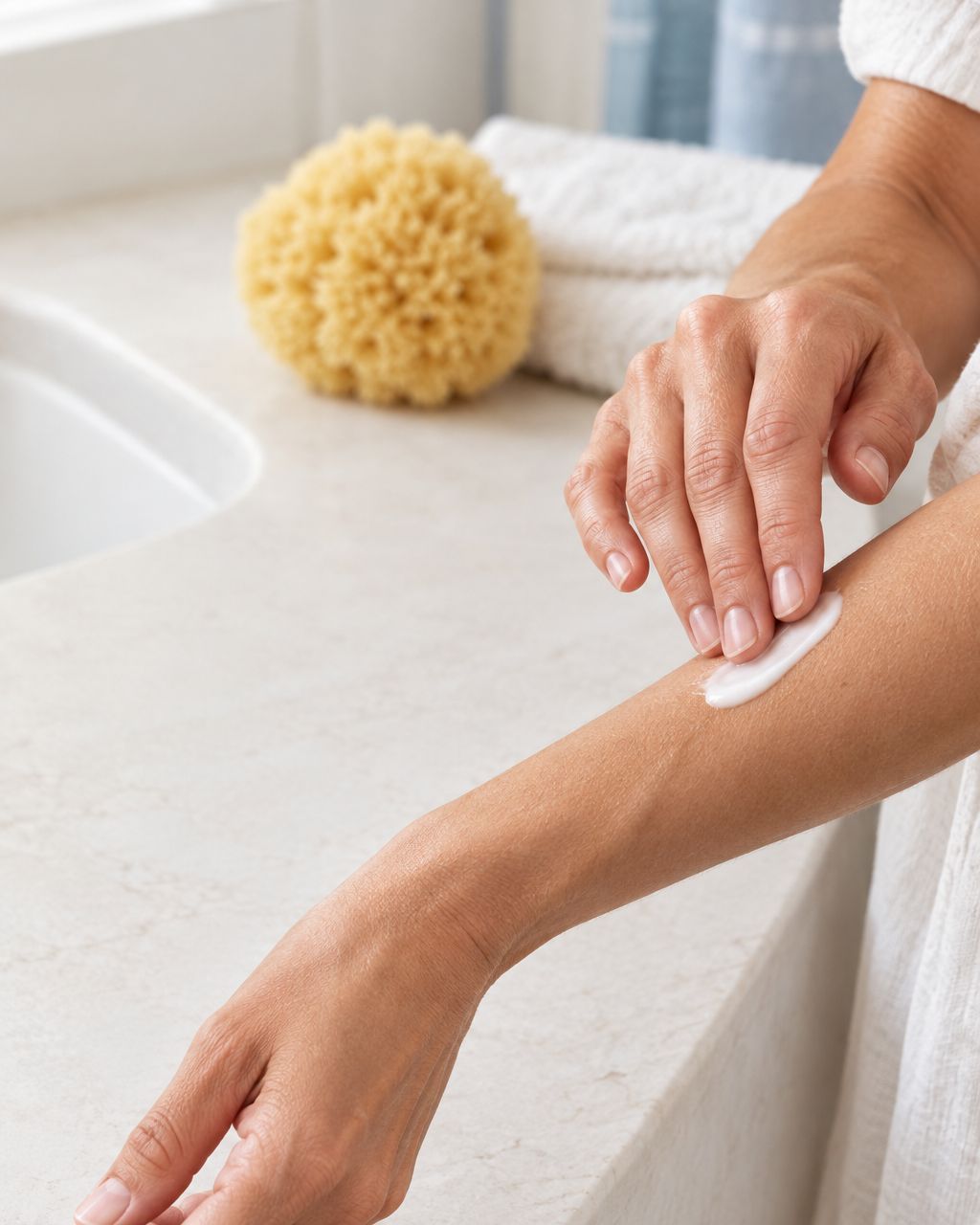
Choose an organic body lotion by matching its ingredients, texture and scent to your everyday routine. At All Things Organic Boutique, essential oils provide the scent in scented products; start with the formula and the feel you enjoy, then check the directions for your chosen option.
- Choose organic body lotion by its ingredients, texture and how comfortably it fits your routine.
- All Things Organic Boutique uses essential oils for scent in its scented products.
- Check the ingredients for your chosen option, especially if you have known sensitivities.
- Apply moisturizer to damp skin after bathing, following the product's directions.
How to choose an organic body lotion for everyday use
Start with a simple question: what would make a lotion easy for you to use regularly? You might prefer a light finish before getting dressed, an essential-oil scent you enjoy after a shower or an unscented option that keeps your routine simple.
Your answer gives you a practical starting point. From there, use these checks:
- Read the ingredients. Look beyond the ingredients highlighted in a short description and review the label for your chosen option.
- Consider the texture. Choose a finish that suits your skin's comfort and the time you plan to apply it.
- Choose your scent preference. Look at the specific essential oils used, rather than choosing by a scent name alone.
- Check intended use. Follow directions for where and how to apply the lotion.
- Ask questions before choosing. If an ingredient or scent detail is unclear, get clarification first.
The boutique's Organic Body Silk Lotion offers a starting point for shoppers considering a lighter everyday moisturizer. The important part is choosing the version that fits you, not assuming that everyone needs the same bottle.
Why this matters: everyday care should feel personal
A useful lotion is one you feel comfortable reaching for. Its texture, scent and ingredients should make sense for your routine, whether that means a quiet moment after bathing or a quick application before the day begins.
All Things Organic Boutique's selection reflects the founder's ingredient research and health-coaching experience. Products are personally handpicked, giving ingredient-conscious shoppers a more considered starting point than a long, unfamiliar list of choices.
That personal approach does not mean every formula is right for every person. It means you can begin with a thoughtfully selected option and still make room for your own preferences, known sensitivities and questions.
Choose the lotion that fits your skin and your life—not simply the most appealing claim on the bottle. That remains a useful buying rule in 2026, even when ingredient trends change.
Understand how essential oils contribute to scent
The boutique uses essential oils to scent its scented products. The clearest way to describe those options is scented with essential oils: it tells you where the scent comes from without leaving you to guess.
Scent is a personal part of self-care. You might enjoy a botanical scent as you apply your lotion, or prefer an option labeled Unscented. Neither choice needs to be complicated; begin with what you enjoy and what you already know about your skin.
When looking at a scented option, check:
- Which essential oils are identified in that particular formula.
- Whether you have used those ingredients comfortably before.
- Any directions or warnings for the chosen option.
- Whether the scent suits when and where you want to use it.
A scent name is not a complete ingredient list. A familiar name can help you browse, but the actual formula is what matters when you need to avoid a specific ingredient.
Essential-oil scent should also not be treated as a promise that a product cannot irritate skin. Personal tolerance still matters. If you have a known allergy or have been advised to avoid scented skin care, follow that advice when considering botanical ingredients too.
Read the formula as a whole
Recognizable ingredients can make a lotion feel easier to understand. Shea butter, aloe and jojoba are useful names to see in a description, but a handful of featured ingredients does not explain the entire finished formula.
The Organic Body Silk Lotion description names aloe leaf juice, cocoa butter, shea butter, vitamin E, honey and jojoba, along with botanical ingredients. These details help you decide what questions to ask. They are not a substitute for checking the current label for the exact option you choose.
You do not need to memorize ingredient names. Instead, separate three things:
- What the description highlights: selected ingredients and the intended feel.
- What the label lists: the ingredients in the finished product.
- What you need personally: your preferences and any ingredients you avoid.
That distinction is especially helpful if you shop according to a dietary or lifestyle preference. For example, an organic label does not mean a lotion is vegan. Because the lotion description names honey, anyone avoiding animal-derived ingredients should check the formula before choosing.
Ask about unfamiliar ingredients rather than assuming that a longer name signals a problem. Clear explanations are more helpful than dividing all ingredients into reassuring and worrying categories.
What does organic tell you about a body lotion?
Organic claims relate to ingredient sourcing and applicable production standards. They do not, by themselves, tell you whether you will enjoy a lotion's texture or whether its formula suits your skin.
The U.S. Food and Drug Administration distinguishes cosmetic safety and labeling requirements from the U.S. Department of Agriculture's oversight of organic agricultural claims. It also explains that choosing ingredients from natural or organic sources is not a guarantee of safety.
For your 2026 shopping checklist, focus on what the claim actually describes. Does the listing identify particular organic ingredients? Does it state a certification? Avoid assuming that a finished product has a certification when one is not provided.
A thoughtful purchase can reflect your preference for organic ingredients without treating every other ingredient as harmful. You can care about sourcing and still judge the finished lotion by its clarity, comfort and suitability for your own routine.
Choose a texture you will enjoy using
Texture is worth considering before scent. A lotion you love smelling but dislike wearing is unlikely to become a dependable part of daily care.
For ordinary everyday moisturizing, start with the finish you prefer. If your skin is overly dry, the American Academy of Dermatology recommends a cream or ointment rather than a lotion. A lighter formula is not always the right answer simply because it spreads easily.
| Texture | Best for | Practical advantage | Limitation |
|---|---|---|---|
| Lotion | Shoppers who prefer lighter everyday application | Easy to spread over larger body areas | Can be insufficient for overly dry skin |
| Cream | Shoppers looking for a richer moisturizer | A fuller-feeling alternative to lotion | The finish varies by formula |
| Ointment | Shoppers following advice for very dry areas | A heavier moisturizing option | Its feel does not suit every routine |
Use those differences to narrow your search, not to diagnose a skin condition. Persistent dryness, cracking or pain deserves advice from a dermatologist rather than repeated guesses about which cosmetic to buy.
Think about timing too. A texture you enjoy at the end of the day might not be your favorite immediately before getting dressed. The right choice should work in the routine you actually have.
Where Organic Body Silk Lotion fits
All Things Organic Boutique offers Organic Body Silk Lotion from Sweet Harvest Farms in a 6 oz bottle. The product listing describes small-batch production and a fast-absorbing, non-greasy feel, with scented choices and an option labeled Unscented.
Best for: shoppers who want to explore a lighter daily lotion and appreciate personally selected body care with ingredient-focused guidance.
The listing's texture description is helpful when deciding whether the lotion matches your preferences. It is not an independent wear test or a promise that every person will experience the same finish.
Reasons to consider it
- The listing identifies the maker and names several ingredients.
- The lotion format offers a straightforward option for everyday application.
- You can consider an essential-oil scented choice or ask about the Unscented option.
- The boutique's selection is grounded in the founder's ingredient research.
What to check before choosing
- Review the label for the specific option you want.
- Ask which essential oils are used if that detail matters to you.
- Check any ingredients you avoid, including honey.
- Consider a richer moisturizer if a light lotion does not meet your needs.
All Things Organic Boutique suits organic body lotion shoppers who value personal selection and practical ingredient guidance. The next step is choosing according to your own routine—not buying a formula simply because someone else enjoys it.
Pair your lotion with a soap in the same scent
The boutique's lotions and soaps come in matching scents, so you can pair them for a coordinated self-care routine. Choose a soap and lotion in the same scent to carry your preferred essential-oil scent from washing to moisturizing.
Use the soap as directed, then apply the matching lotion after bathing according to its directions. It's a simple way to enjoy a scent you love across both steps of your daily care.
Make moisturizing a comfortable after-shower habit
Keep the routine simple enough to repeat. You do not need to build an elaborate sequence around a body lotion; a suitable formula and clear directions give you a useful place to start.
The American Academy of Dermatology's dry-skin guidance, updated January 2, 2026, recommends 5–10 minute baths or showers in warm water and applying moisturizer while skin is still damp. It also advises moisturizing after handwashing and when skin feels dry.
A practical sequence is:
- Cleanse gently, following your cleanser's directions.
- Pat your skin with a clean towel rather than rubbing hard.
- Apply your moisturizer while skin is still damp, unless its directions say otherwise.
- Notice whether the texture feels comfortable for your routine.
- Adjust your product choice if the finish or ingredients do not suit you.
If a product causes burning, stinging or irritation, stop using it and seek advice if symptoms continue. Those sensations are not a sign that you need to push through for better results.
Body lotion also does not replace sun protection. The Academy recommends broad-spectrum, water-resistant sunscreen with SPF 30 or higher, along with shade and protective clothing. Do not count a lotion as sunscreen unless its label identifies it as such.
Why different shoppers choose different lotions
There is no need for everyone to choose the same scent or texture. A good everyday selection makes room for what matters to you.
Use these factors to make the final decision:
- Skin comfort: consider how your skin feels, not just how the lotion sounds in a description.
- Scent preference: decide whether you enjoy an essential-oil scented option or want to ask about Unscented.
- Known sensitivities: avoid ingredients you have been advised not to use.
- Texture: choose a finish you will happily apply at the right time.
- Personal ingredient preferences: check details such as honey rather than relying on broad labels.
- Product directions: use the lotion only as instructed.
When comparing organic body lotion in 2026, these practical details are more useful than chasing a fashionable ingredient. Start with the information you can verify, then ask about anything that would change your choice.
FAQ
What gives the boutique's scented products their scent?
All Things Organic Boutique uses essential oils for scent in its scented products. Check the ingredients for your chosen option or ask the boutique which essential oils it contains.
Can I choose an unscented body lotion?
Organic Body Silk Lotion has an option labeled Unscented. Check its current ingredients and ask for clarification if you need to avoid a specific scent ingredient.
Are essential-oil scented lotions suitable for everyone?
No single formula suits everyone. Essential oils can still be unsuitable for someone with a particular sensitivity, so follow any allergy advice and check the exact ingredients.
Should I choose lotion or cream for very dry skin?
The American Academy of Dermatology recommends a cream or ointment rather than lotion for overly dry skin. Persistent or painful dryness needs professional advice.
When should I apply organic body lotion?
Apply moisturizer while your skin is still damp after bathing, unless the product directions say otherwise. Reapply when your skin feels dry and after handwashing as needed.
Does an organic label mean a lotion is vegan?
No. Organic and vegan describe different things. The Organic Body Silk Lotion description names honey, so check the current ingredients if you avoid animal-derived ingredients.
Can body lotion replace sunscreen?
No. A lotion without a sunscreen label should not be counted as sun protection. Dermatology guidance recommends broad-spectrum, water-resistant SPF 30 or higher alongside shade and protective clothing.
One last thing
A daily lotion should be a comfortable choice, not a complicated one. Start with ingredients you understand, a texture you enjoy and an essential-oil scent that suits your preferences—or ask about an unscented option. Thoughtful selection matters more than collecting promises on a label.
Source notes: General dry-skin and sun-protection guidance follows the American Academy of Dermatology's “Dermatologists' top tips for relieving dry skin,” updated January 2, 2026. Organic-labeling context follows the FDA's “Small Businesses & Homemade Cosmetics: Fact Sheet,” current November 18, 2025. Product details reflect the boutique's listing and the owner's clarification about essential-oil scent, reviewed October 16, 2026. This guide covers cosmetic shopping and everyday care, not diagnosis or treatment.